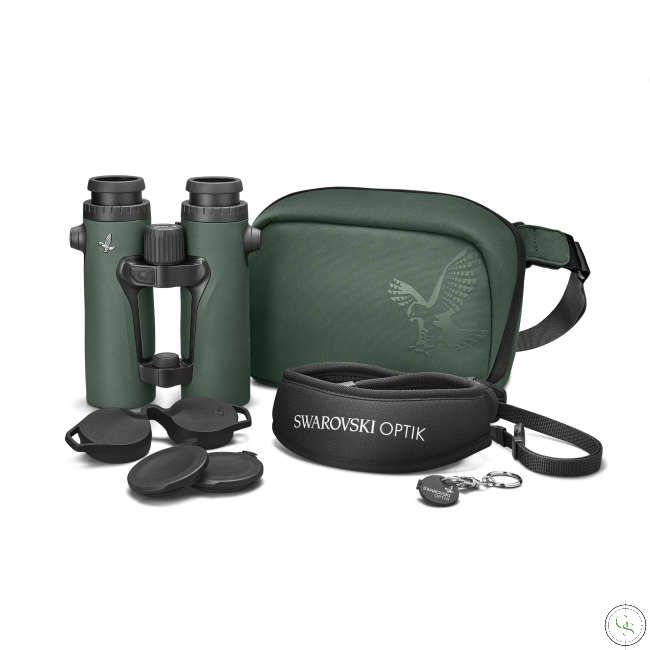


Swarovski - EL Range 12x42
As low as
R 83,000.00
Availability:
In stock
Only %1 left
SKU
EL1242R
Get your goods upfront and pay for
them over 3 interest free instalments
of R 27,666.67. Standard shipping terms
apply.
Find out how >>
them over 3 interest free instalments
of R 27,666.67. Standard shipping terms
apply.
Find out how >>

×



PayJustNow is a simple, easy-to-use payment system.
Here’s how it works:
PayJustNow allows you to pay for your purchase over 3 equal, zero interest instalments. You’ll pay one instalment at the time of purchase, the next at the beginning of the following month and the last one a month thereafter.
#zerointerest
Step 1:
Browse your favourite online stores and proceed to check-out.
Step 2:
Choose PayJustNow as your payment method.
Step 3:
Create your account as easily as if your eyes were shut (though we’d recommend you keep them open).
Step 4:
Complete your purchase and whoop for joy!
Here's what you'll need:
To be over 18 years old
A valid RSA ID document
A debit or credit card
An email address
Description:
The EL Range 12x42 is a pair of binoculars with integrated rangefinder. At the push of a button, it measures distance, angle, temperature and air pressure. The 12x magnification enables outstanding detail recognition both near and far. Thus, you will be able to easily identify wildlife at various distances. The 42 mm objective lens diameter ensures that a lot of light enters the optics, making high-contrast observations possible even at dusk. Weighing just 930 g, the EL Range sits lightly and ergonomically in the hand thanks to its practical wrap-around grip. The EL Range can be individually configured. With a large field of view of 96 m at 1,000 m (288 ft/1,000 yards), you can keep an eye on everything despite the high magnification. The optionally available FRR-42 forehead rest for EL Range 42 helps you to hold the EL Range steady. This way, you can see clear, jitter-free images. With the EL Range, you are ready for any challenge and experience GROUNDBREAKING PRECISION.
Technical Specifications:
Color:
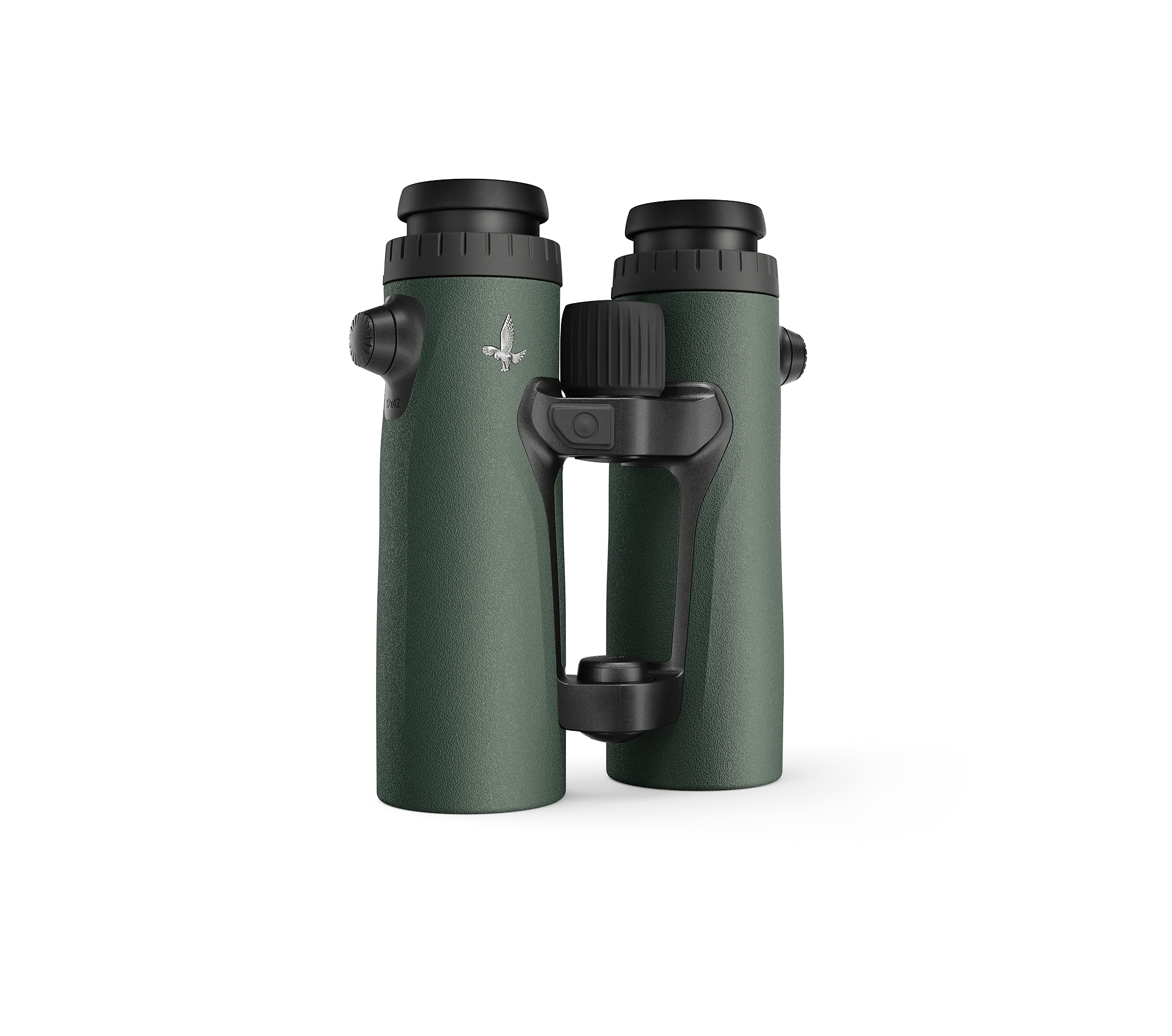
Green
OR
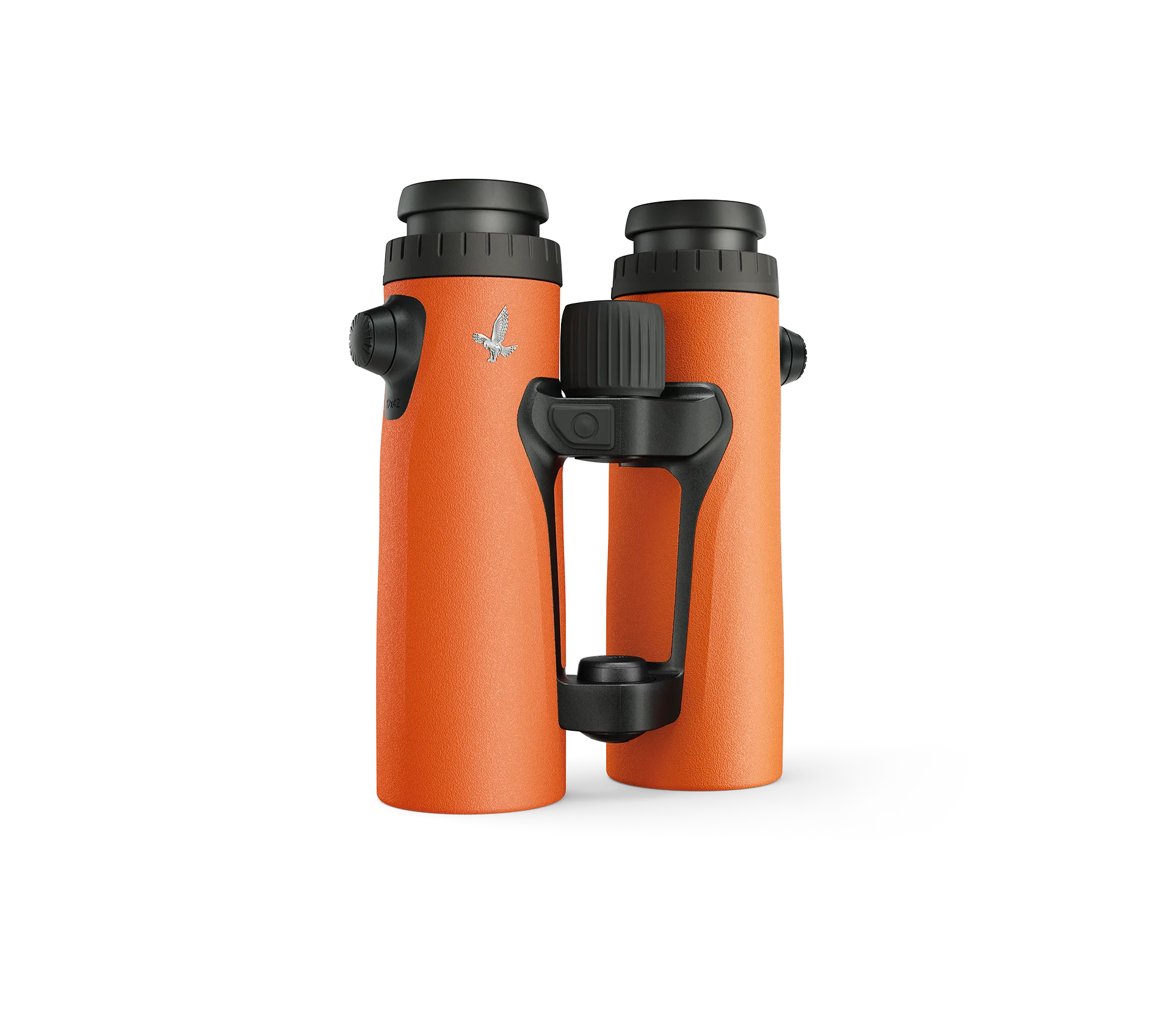
Orange
Size & Weight:
| 168 mm Length in mm. |
136 mm Width in mm. |
| 79 mm Height in mm. |
930 g Weight |
Environment & Conditions:
| -25 to +55 / -10 to +55 °C functional-temperature-mechanically-electronically |
Digital:
| CR2 Battery |
Objective:
| 12x Magnification |
42 mm Effective objective lens diameter |
| 3.5 mm Exit pupil diameter |
19 mm exit-pupil-distance-eye-relief-mm |
| 96 m/1000m Field of view m at 1000m / ft at 1,000yds |
5.5° Field of view degrees |
| 5.5° Field of view with eye glasses (°) |
61 ° Field of view apparent |
| 5 m Shortest focusing distance |
-7 to +5 dpt Diopter adjustment |
| 90 % Light transmission |
56-74 mm Pupil distance |
| 20.5 Twilight factor acc. to DIN-58388 |
Measurement:
| 10 - 2000 m Measuring range in yds./ m. |
1 m Measuring accuracy in yds./ m. |
| ≤ 0.5 s Measuring time |
± 90 ° Angular measurement |
| Class 1 EN/FDA Laser |
Yard / Meter Units |
| 2,000 measurements Life cycle |
WHAT TO CONSIDER WHEN CHOOSING SWAROVSKI:
MAGNIFICATION

The magnification specifies the factor by which an object appears to be closer in comparison with the actual distance. The higher the magnification, the closer the object seems to be. However, a higher magnification also means a smaller field of view. Check the precise product name as the number in front of the ‘x’ specifies the magnification. For example, 10x42 is a device with 10x magnification.
FIELD OF VIEW

The field of view describes the size of the image section that can be seen through the optics. This is specified either in meters (width) at a distance of 1000 meters (m/1000m), or feet (width) at a distance of 1000 yards (ft/1000 yds), or as an angle (degrees). The higher the magnification, the smaller the field of view.
Binoculars have a large field of view, which means you can see a wide area. Spotting scopes have a higher magnification, which makes the field of view much smaller, but you can see more detail.
OBJECTIVE LENS DIAMETER

The objective lens diameter specifies how much light can enter the optics. This makes it a key factor in an instrument’s performance, for example, in twilight. The bigger the objective lens diameter, the more light the objective lens can capture. The darker the surroundings, the larger the objective lens diameter needs to be. Check the precise product name as the number after the ‘x’ specifies the objective lens diameter in millimeters. For example, a device with the suffix 10x42 has an objective lens with a diameter of 42 mm.
SHORTEST FOCUSING DISTANCE

The shortest focusing distance specifies how close an object needs to be to see it clearly with the optics. Between this value and infinity, it is possible to focus the image.
More Information
| Exportable products | No |
|---|
Reviews
Write Your Own Review